Payment Pathways Connecting Slot Reel Cascades with Dealer Table Payouts and Event-Based Wagers
Alex Otto · Oct 28, 2026
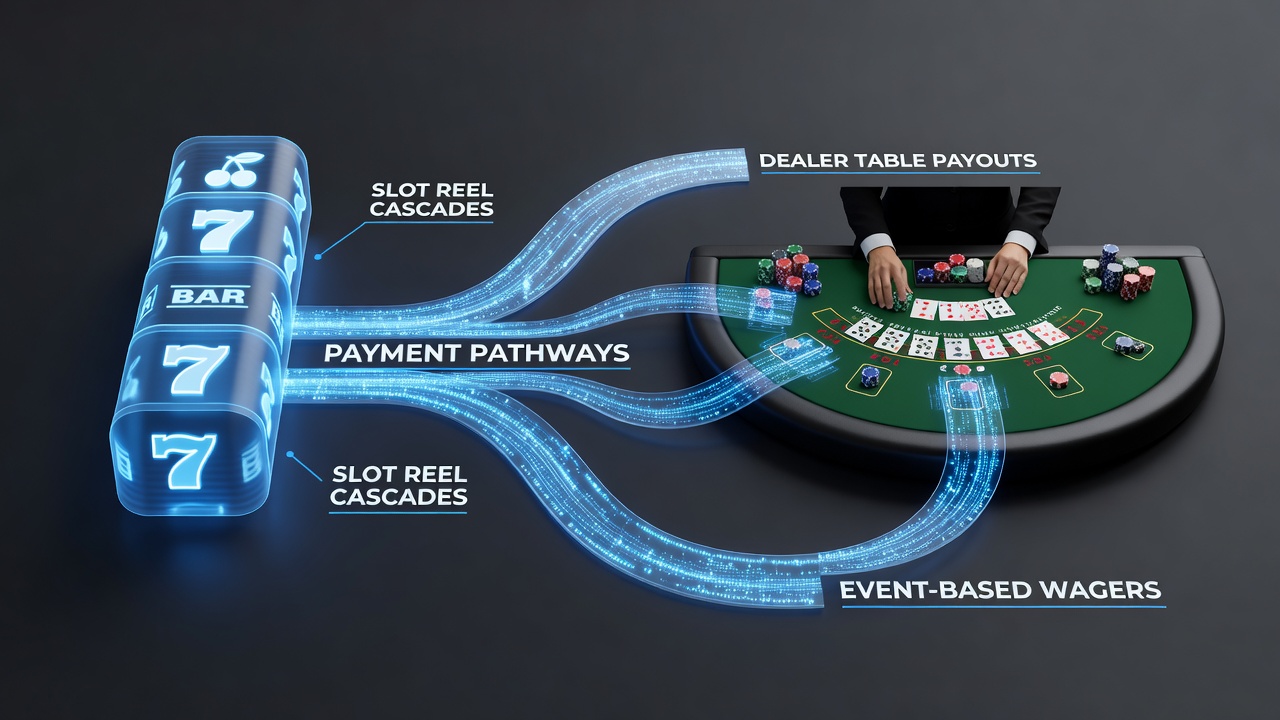
Payment Pathways Connecting Slot Reel Cascades with Dealer Table Payouts and Event-Based Wagers
Payment systems now route funds across slot reel cascades, live dealer tables, and event-based wagers through unified ledgers that update balances in real time. These pathways rely on instant deposit rails, shared wallet protocols, and automated settlement engines that move value between game types without manual intervention. Operators integrate these tools so that winnings from a cascading slot sequence can fund a blackjack hand or an in-play soccer wager within the same session.
Mechanics of Slot Reel Cascade Funding
Slot reel cascades generate successive wins when symbols drop and new ones replace them, and modern platforms credit these amounts directly to player wallets via API calls that trigger on each collapse. Payment processors such as those certified under Nevada Gaming Control Board standards handle the micro-transfers, while aggregated totals feed into bonus pools that players can redirect toward table games or conditional bets. Data from the Nevada Gaming Control Board shows that platforms using these instant rails process cascade sequences at rates exceeding 200 transactions per minute during peak play periods.
Event-based wagers enter the flow when players allocate portions of cascade winnings to markets that resolve on specific outcomes, such as next-goal timing in sports or card-draw results at dealer tables. The same ledger tracks eligibility for progressive contributions, so a single deposit can seed activity across all three categories while compliance checks run in the background.
Live Dealer Table Settlements and Cross-Game Transfers
Dealer table payouts follow similar automated paths, with chips converted to wallet credits once a hand concludes. Systems then allow those credits to cascade into slot sessions or event wagers without leaving the platform interface. Observers note that multi-game wallets reduce friction because they maintain one balance that updates across verticals, and operators configure rules so that table-game wins can trigger slot bonus eligibility or event-bet multipliers.

In October 2026 several platforms began testing enhanced settlement layers that synchronize dealer payouts with slot cascade ledgers and live event markets. These layers use timestamped transaction logs to ensure that funds from one category remain available for the others within regulatory hold periods. Industry reports indicate that such synchronization cuts average transfer latency from 12 seconds to under three seconds, allowing players to move from a completed roulette spin to a cascading slot round or an open soccer accumulator without interruption.
Event-Based Wagers and Unified Payment Rails
Event-based wagers depend on conditional triggers that resolve according to external data feeds, and payment pathways now embed those triggers directly into wallet logic. When a slot cascade meets a threshold, the system can auto-allocate a portion to an event market while the remainder stays available for dealer tables. This structure appears in platforms that link progressive jackpot contributions to both slot activity and table-game participation, creating continuous funding loops across categories.
Researchers at the University of Las Vegas Center for Gaming Research have documented how these loops operate under strict audit trails that record every transfer between game types. Their findings show that unified rails improve reconciliation accuracy because each movement carries metadata that identifies the originating game and the destination market. Platforms therefore meet reporting requirements from multiple jurisdictions without duplicating transaction records.
Regulatory and Technical Integration Points
Technical standards require payment gateways to maintain separation between player funds and operator reserves while still permitting instant movement between slot cascades, dealer tables, and event wagers. Gibraltar regulatory frameworks, for instance, mandate that operators demonstrate real-time visibility into these movements during compliance audits. Systems achieve this through encrypted ledgers that timestamp every allocation and redemption, allowing regulators to trace funds from an initial deposit through cascade wins, table settlements, and event resolutions.
Operators also embed responsible-gaming controls inside the same pathways so that deposit limits or session caps apply uniformly across all three categories. When a player reaches a preset threshold on slot cascades, the system can restrict further transfers to dealer tables or event wagers until the limit resets. This uniform application reduces the need for separate controls per game type and simplifies reporting for oversight bodies.
Conclusion
Payment pathways that connect slot reel cascades with dealer table payouts and event-based wagers rely on shared ledgers, instant rails, and synchronized settlement engines. These systems enable seamless movement of value while preserving audit trails required by regulators in multiple regions. As platforms continue to refine timestamped transaction logs and cross-category eligibility rules, the infrastructure supporting integrated play expands without altering the underlying separation of funds or compliance obligations.