Portable Device Transaction Patterns and Their Role in Progressive Slot Multipliers with Live Table Shifts
Anna Werner · Oct 14, 2026
Portable Device Transaction Patterns and Their Role in Progressive Slot Multipliers with Live Table Shifts
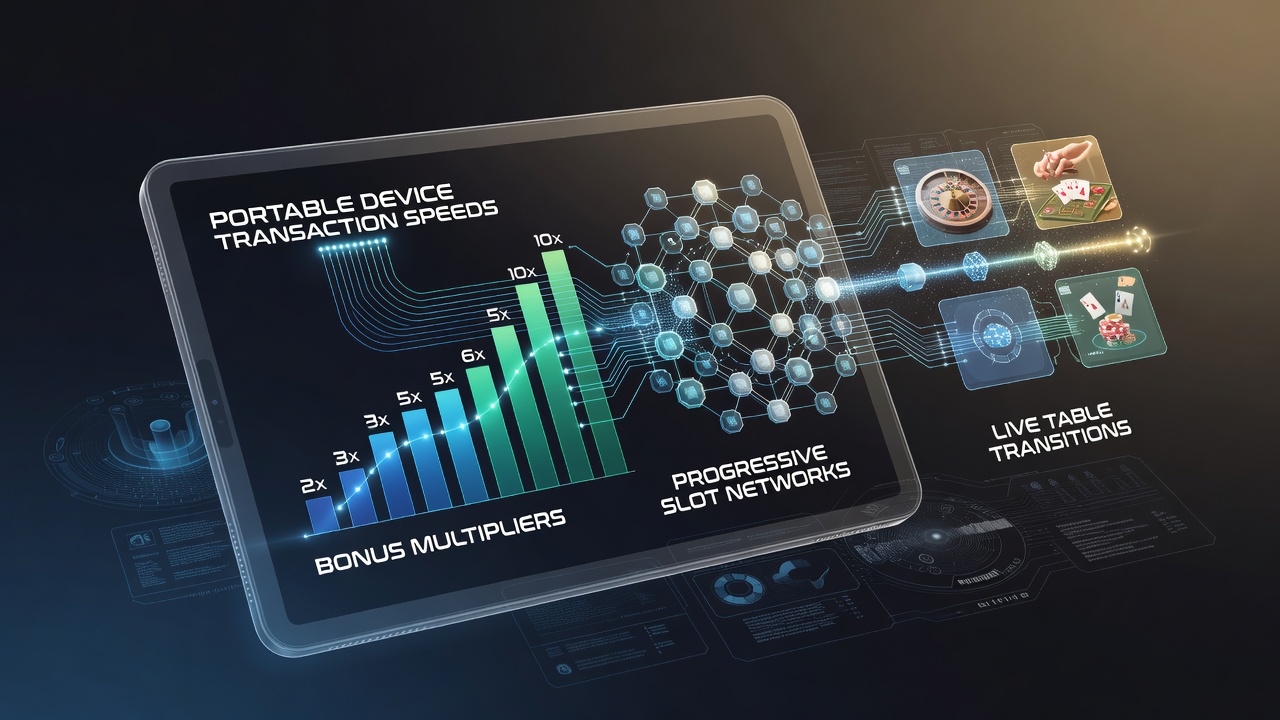
Portable device transaction speeds create layered data patterns that connect directly to bonus multipliers in progressive slot networks while also influencing transitions into live table environments, and researchers tracking these systems note that the speed of each payment confirmation often determines how quickly a multiplier accumulates across connected games.
Core Mechanics of Transaction Speed Data Layers
Transaction data moves through multiple layers on portable devices where each layer records timing, network latency, and confirmation status before feeding that information into central gaming servers, and when these speeds increase the system registers the event as a qualifying factor for multiplier adjustments in progressive pools. Observers note that slower transactions trigger separate logging sequences that delay bonus activation whereas rapid confirmations allow the network to stack multipliers in real time across linked slot titles. Data from network monitoring tools shows patterns where devices operating on 5G connections produce shorter latency windows compared with 4G setups, and those shorter windows correlate with higher frequency multiplier triggers in progressive structures.
Progressive Slot Networks and Layered Speed Integration
Progressive slot networks pull transaction speed information from individual devices to adjust contribution rates toward shared jackpots, and this integration occurs through algorithms that assign points based on how quickly each bet processes from mobile wallet to game server. When a device completes a transaction in under two seconds the system often records that event in an upper data layer that feeds directly into multiplier calculations, whereas delays push the record into a lower layer that receives reduced weighting. Studies from the University of Nevada Reno indicate that these layered approaches allow operators to maintain consistent jackpot growth rates even as player volumes fluctuate across different device types and connection qualities.
One documented case involved a network where mobile users with sub-second transaction times received automatic multiplier boosts that carried over into subsequent spins, and the same network applied standard rates to users whose payments took longer to clear. This differentiation occurs because the data layers treat speed as an input variable rather than a fixed constant, which means the overall progressive pool receives contributions at varying intensities depending on the device performance recorded at each step.
Transitions Between Slot Networks and Live Table Environments

Live table transitions rely on the same transaction speed layers to determine whether a player carries forward any accumulated multipliers from slot sessions, and the handoff happens when the system detects a completed mobile transaction followed by a table entry request within a defined time window. Faster transaction speeds increase the likelihood that the multiplier value survives the transition intact, while slower speeds may cause the system to reset the multiplier to its base level before the player reaches the live dealer interface. Reports from the Australian Institute of Criminology highlight that these transition rules appear in multiple operator platforms where data layers function as gatekeepers between game categories.
Patterns emerge most clearly during peak hours when network congestion affects transaction times, and players using devices with optimized payment pathways maintain their multiplier advantages more consistently than those on standard connections. The layered approach allows the platform to apply different transition rules based on real-time speed data rather than applying uniform settings across all users.
October 2026 Data Releases and Observed Trends
October 2026 brought updated figures from several regional monitoring bodies that tracked transaction speed impacts across progressive networks, and these releases showed measurable increases in multiplier activation rates among users with high-speed mobile connections. The data further revealed that live table transitions occurring after rapid slot transactions produced higher average session durations compared with transitions following slower payments. Industry organizations such as the Canadian Gaming Association have published summaries that align with these findings, noting that layered data systems continue to refine how speed metrics influence bonus structures without altering core game mathematics.
Additional patterns identified in the October releases include correlations between specific device models and transaction consistency, where certain hardware combinations generate more stable speed readings that translate into predictable multiplier behavior across both slot and table environments. These observations come from aggregated server logs rather than individual player data, which preserves anonymity while still revealing system-level trends.
Conclusion
Layered data patterns that link portable device transaction speeds to bonus multipliers continue to shape how progressive slot networks operate and how players move between those networks and live table environments, and ongoing monitoring by research institutions provides regular updates on these mechanics. The systems rely on speed as a variable input that influences multiplier calculations and transition outcomes without changing the underlying probabilities of individual games. As device technology and network capabilities evolve, the same layered approaches are expected to incorporate new data points while maintaining the core connection between transaction timing and bonus structures across connected platforms.